
An unpaid invoice is frustrating. An unpaid invoice from a customer that has gone quiet, changed its phone number or says it “has no money” is worse. But if the owner signed a personal guarantee when you opened the account, the business is not the only one who owes you.
Here is what a personal guarantee does, how to check that yours will hold up, what changes if the business files for bankruptcy, and how collection against a guarantor usually works.
Why the personal guarantee matters
Most of your customers are LLCs or corporations. That structure exists to keep the owners’ personal money separate from the company’s debts, so as a general rule the owner is not personally responsible when the company does not pay.
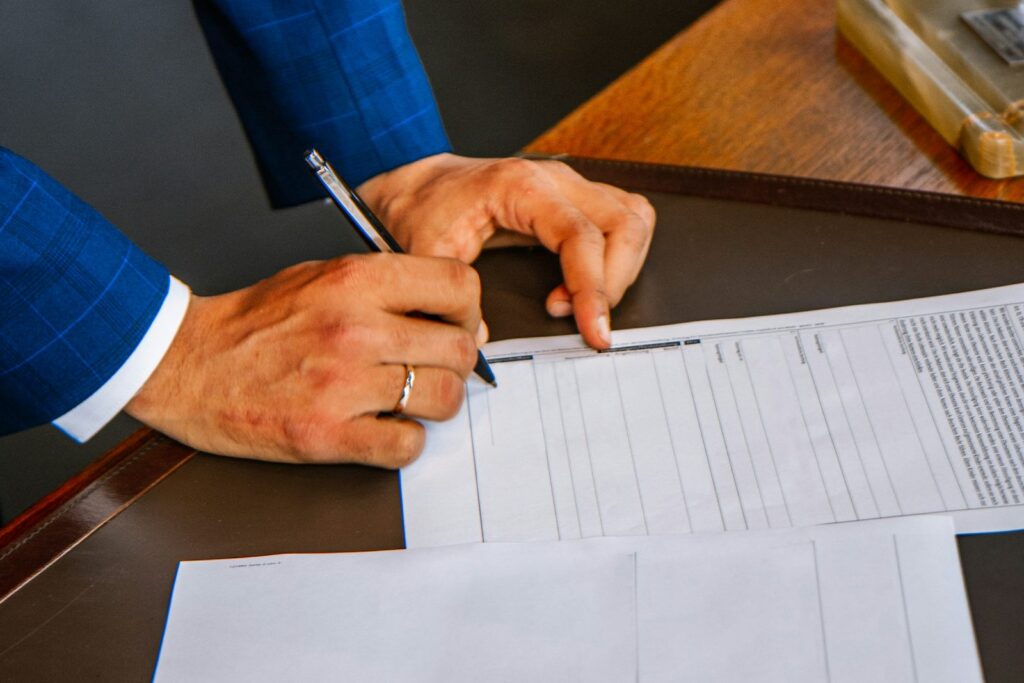
A personal guarantee changes that. It is a separate promise, made by a person, to pay the company’s debt if the company does not. Suppliers often put one in the credit application for exactly this reason. When the company stops paying, the guarantee gives you a second place to collect from: the person who signed it.
First, check what you actually have
Before anyone contacts the owner, pull the signed credit application or guarantee and read it closely. The wording decides how strong your position is.
Before you call the owner
Check your personal guarantee in six questions
- 1Is it in writing and signed?A promise to pay someone else’s debt generally has to be in writing to be enforced. Find the signed copy, not just the template.
- 2Did they sign as a person?Look for words like “individually” or “personally” and a separate guarantor signature line. A signature with only a title, such as “President,” can give the owner an argument that only the company signed.
- 3Which company and which debts?Check that the company name matches the customer you invoiced, and whether the guarantee covers all future orders or only one deal.
- 4Is there a limit?Some guarantees are capped at a dollar amount, end on a date, or can be canceled by written notice for future orders.
- 5Payment or collection?A guarantee of payment usually lets you go to the guarantor as soon as the company defaults. A guarantee of collection usually means you must first pursue the company, often to a judgment that goes unpaid, or show the company is insolvent, before the guarantor has to pay.
- 6Any notice rules?Some guarantees require a written demand to the guarantor, at a set address, before you can sue. Follow them to the letter.
Mistakes that can weaken a guarantee
Many guarantee disputes turn on paperwork. Common problems:
- A title-only signature. Courts look at the whole document, and many still enforce a clearly worded guarantee. But a signature that reads “Jane Smith, President” with no personal wording invites a fight.
- A different company. If the owner opened a new LLC or changed the company name, the guarantee may only cover the entity named in it.
- Changing the deal without the guarantor. In some states, major changes to the credit terms made without the guarantor’s consent can reduce or release the guarantee. Many guarantees include a clause that allows changes; check for it.
- Requiring a spouse to sign. Federal credit rules (Regulation B, under the Equal Credit Opportunity Act) let a creditor require the owners or officers of a business to sign a personal guarantee, but generally bar it from automatically requiring the guarantor’s spouse to sign too. A spouse can volunteer. A spouse’s guarantee you required anyway may be open to challenge, though courts disagree on whether a guarantor can raise that defense.
- Waiting too long. Claims against a guarantor have their own legal deadline, which depends on the state and the wording. Do not assume you have the same time you have against the company. See our guide to the statute of limitations on debt collection.
What if the business files for bankruptcy?
When a company files for bankruptcy, the automatic stay stops collection against the company. It generally does not protect the owner who guaranteed the debt, because the guarantor is a different person from the company. In some Chapter 11 cases, a court extends the stay or issues an order protecting a guarantor, usually when that person is key to the company’s reorganization. Have an attorney check the bankruptcy docket before you contact the guarantor while the case is pending.
Two related points to keep in mind:
- The guarantor files personally. If the owner files their own bankruptcy case, the stay protects them too. Stop and treat it like any other bankruptcy notice.
- The Chapter 13 co-debtor stay. In an individual’s Chapter 13 case, a special stay protects people who are liable with the debtor, but only on consumer debts. It generally does not reach a guarantee of a business debt.
If your customer has already filed, our guide Your Customer Filed Chapter 11. What Happens to the Money They Owe You? covers the claim deadlines and the rights suppliers often miss.
How collection against a guarantor usually works
- Gather the file. The signed credit application or guarantee, invoices, statements, proof of delivery, emails about the balance, and the guarantor’s last known address.
- Send a written demand. Send it to the company and to the guarantor, following any notice clause in the guarantee. Keep a copy and proof of delivery.
- Place the account. A collection agency can contact both the company and the guarantor and work toward payment or a payment plan.
- Escalate if needed. If the balance justifies it, an attorney can often sue the company and the guarantor in the same case, unless the company is in bankruptcy or the guarantee requires you to pursue the company first. Learn more about litigation collections.
- Enforce the judgment. A judgment against the guarantor is a judgment against a person, which can open state collection tools such as wage garnishment, bank levies and liens on property. Each state limits these tools and protects certain income and property, and some states do not allow wage garnishment for ordinary debts. See judgment collections and how to start the judgment collection process.
Set up the next account the right way
The best time to strengthen a guarantee is before the first order ships. A few habits help:
- Use a separate guarantee section with its own signature line, the guarantor’s printed name, and the word “individually.”
- Name the customer by its exact legal name, and say whether the guarantee covers all future orders.
- Collect the guarantor’s home address so a demand can reach them later.
- Ask owners or officers to guarantee because of their role in the business, and do not automatically require a guarantor’s spouse to sign.
- Have a business attorney review your credit application once, then use it for every new account.
For more on vetting new customers, see extending credit to startups.
How Snap Debt Recovery helps
When you place an account, we review what is owed, who signed what, and what is realistic to recover. If there is a personal guarantee, our commercial collections team can pursue both the company and the guarantor. Where a lawsuit makes sense, an affiliate attorney can review the claim. If we learn that the company or the guarantor has filed for bankruptcy, we pause collection against whoever is protected by the stay and tell you.
Have a customer who stopped paying but signed a guarantee? Submit your account online or call (888) 655-7627 for a no-obligation review.
Related: See how our small business collections service handles unpaid invoices from other businesses.
This article is general information, not legal advice. Snap Debt Recovery is a collection agency, not a law firm. Whether a guarantee can be enforced depends on its exact wording and on state law, so speak with an attorney about a specific account.
Sources: 11 U.S.C. § 362 (automatic stay); A.H. Robins Co. v. Piccinin, 788 F.2d 994 (4th Cir. 1986) (stay extended to non-debtors in unusual circumstances); 11 U.S.C. § 1301 (Chapter 13 co-debtor stay, consumer debts); 12 C.F.R. § 1002.7(d) and Official Interpretations 7(d)(6)-1 and 7(d)(6)-2 (Regulation B, signatures of spouses and guarantors); 15 U.S.C. § 1691 (Equal Credit Opportunity Act); Hawkins v. Community Bank of Raymore, 577 U.S. 495 (2016) (Supreme Court evenly divided on whether guarantors are protected applicants); U.C.C. § 3-419(d) (guaranty of collection); Restatement (Second) of Contracts § 110 (suretyship provision of the statute of frauds); 15 U.S.C. § 1673 (federal wage garnishment limits); Cornell Law School Legal Information Institute, Wex, “guaranty”; U.S. Courts, Chapter 11 Bankruptcy Basics.